Sexual performance anxiety is one of those problems that’s easy to research and hard to fix. You can understand exactly what it is, recognize the loop it runs on, even identify your specific triggers — and still not know what to actually do about it.
This post is the action half. It covers every legitimate approach to overcoming sexual performance anxiety — behavioral, psychological, and medical — organized in a way that helps you figure out which combination makes sense for your specific situation. Because there’s no universal protocol here. What works for a man whose SPA is driven by relationship issues is different from what works for a man whose triggers are rooted in past trauma, body image concerns, or low testosterone.
Whether you’re struggling with sexual performance anxiety for the first time or dealing with something that’s been running for years, the toolkit is bigger than most men realize. The men who get through this are almost always the ones who stop waiting for the problem to resolve itself and start working on the creating their solution instead.
Key Takeaways
- There's no single fix for sexual performance anxiety, but there's a well-mapped set of approaches with strong track records, and most men find meaningful improvement by combining a few of them.
- Behavioral techniques like sensate focus work by removing performance pressure from the equation entirely, not by improving performance directly.
- Cognitive behavioral therapy is one of the most evidence-based treatments available for SPA and doesn't require years of analysis to produce results.
- Communication with a partner isn't optional. Trying to manage SPA in silence adds a layer of concealment that makes everything harder.
- Medical options, including PDE5 inhibitors, can be useful strategic tools. Not as a permanent crutch, but as a way to break the anxiety loop long enough for confidence to rebuild.
Start With the Loop, Not the Symptom
Before getting into specific techniques, one principle worth establishing: the goal isn’t better erections. The goal is a quieter brain.
Treating the symptom (the failed sexual arousal, the premature ejaculation, the avoidance) without addressing the loop that generates those symptoms produces results that don’t last. A man who white-knuckles his way through sex without addressing what’s driving his anxiety hasn’t solved anything. He’s just gotten lucky a few times.
Every approach in this post is aimed at the underlying loop: the threat-detection pattern the brain has learned to run in intimate situations, and the reinforcement cycle that keeps it running. When the loop quiets down, the symptoms tend to take care of themselves.
That said, start somewhere. Paralysis by analysis is its own version of avoidance. Pick one or two approaches that fit your situation and begin. Refinement comes later.

Mindset Shifts That Actually Move the Needle
Mindset work gets a bad reputation in men’s health spaces because it’s often presented as vague motivational content with no practical traction. Done properly, it’s nothing like that. These are specific cognitive reframes with direct mechanical effects on the anxiety loop.
From Performance to Pleasure
The single most damaging frame a man can bring to sex is the performance frame, where the encounter becomes a test with defined success criteria. Under this frame, getting hard becomes a deliverable. Orgasm becomes a KPI. The whole thing starts to feel like a quarterly review, and nobody performs well when they’re being evaluated.
The shift is to a pleasure frame: the goal of a sexual experience is enjoyment and connection, full stop. Men who genuinely enjoy sex again, who stop treating every encounter as a referendum on their adequacy, almost universally report that the physical symptoms subside. There’s no grade at the end. This sounds simple, and it genuinely is, but the brain doesn’t automatically update its operating assumptions. It needs deliberate repetition.
Practically, this means catching performance-frame thoughts (“I need to stay hard,” “she needs to finish,” “I’m taking too long”) and replacing them with presence-frame redirects (“what do I actually feel right now,” “what does she seem to enjoy”). It’s attention management, not affirmation territory. Men with social anxiety often recognize this pattern immediately. The same hypervigilance about being evaluated that shows up in public situations runs the same program in the bedroom.
Dropping the Binary
Performance anxiety thrives on binary thinking: it either worked or it didn’t, I performed, or I failed, the night was a success or a disaster. Binary thinking collapses the entire range of a sexual encounter into a single data point, and that data point is almost always “failure” when anxiety is involved.
The reframe is to granularity. A night when things were inconsistent but the connection was genuine, and both people felt close, is not a failed night. It’s a complicated one. Learning to evaluate sexual experiences on multiple dimensions (pleasure, connection, presence, communication) rather than a single functional metric is one of the more durable mindset shifts available.
Reframing Bad Nights as Data
A bad night is information. Something about the conditions — stress level, anxiety load, how things were going with your partner, physical state — wasn’t right. That’s worth knowing.
Men who catastrophize bad nights (“this is never going to get better,” “I’m broken”) are using the experience to confirm a narrative rather than learn from it. Men who treat bad nights as feedback can ask more useful questions: Was I more stressed than usual? Did I put pressure on myself going in? Was there tension with my partner that I didn’t address?
This reframe doesn’t make bad nights pleasant. It makes them useful.
The Spectatoring Interrupt
Spectatoring is the habit of mentally stepping outside the experience to observe and critique your own performance in real time. It’s one of the most reliable arousal killers in existence, and it’s also a habit, which means it can be interrupted.
The interrupt is simple: when you notice you’ve left the experience and entered the commentary booth, redirect attention deliberately to physical sensation. Not to performance, not to outcomes. To what you can actually feel in your body right now. The warmth of skin, the weight of presence, the physical details of the moment.
This takes practice. The brain doesn’t stop spectating just because you’ve asked it to. But each deliberate redirect weakens the habit slightly, and consistency compounds.

Cognitive Behavioral Therapy for SPA
Cognitive behavioral therapy (CBT) is the most evidence-based psychological treatment available for sexual performance anxiety, supported by peer-reviewed studies across multiple decades. It works by targeting the specific thought patterns and behavioral responses that maintain the anxiety loop, not the distant childhood origins of every insecurity a man has ever had. Men who are serious about overcoming performance anxiety consistently find it to be one of the highest-leverage tools available.
Cognitive behavioral therapy for SPA typically involves three core components.
Identifying the specific thoughts
Most men with SPA are running a fairly consistent set of catastrophic predictions — “I’m going to lose it,” “she’s going to be disappointed,” “this is going to happen every time.” These thoughts feel like facts. They aren’t. The first step is getting them out of the background and onto paper, where they can be examined.
Challenging the evidence
Once the thoughts are identified, CBT asks: What’s the actual evidence for and against this prediction? How many times has this exact outcome occurred versus how many times have things gone reasonably well? What would you say to a friend who was running this same prediction? The goal isn’t toxic positivity. It’s accurate thinking.
Behavioral experiments
This is where the rubber meets the road. Rather than just thinking differently, behavioral experiments involve testing predictions in real situations. If the prediction is “I’ll definitely lose it under pressure,” a behavioral experiment might involve deliberately creating low-pressure closeness to test whether the prediction holds. Usually, it doesn’t, which is data the brain can actually use.
This approach doesn’t require years on a couch. Many men see meaningful shifts within 8–12 sessions with a therapist who has experience with sexual concerns. For men with milder SPA, structured self-directed workbooks can produce results, though the accountability of working with a professional tends to accelerate progress.

Behavioral Techniques
These are the hands-on approaches, the things you actually do rather than think. For many men, behavioral techniques produce the fastest tangible results because they directly address the conditions that generate anxiety rather than working through cognitive mediation.
Sensate Focus
Sensate focus is the grandfather of behavioral SPA treatment, developed by Masters and Johnson in the 1960s and still one of the most effective tools available. The basic concept is disarmingly simple: structured physical intimacy with performance expectations deliberately removed.
The classic protocol involves several stages. Early stages focus on non-genital touch — exploring physical sensation with a partner with no expectation of sexual activity. Later stages introduce genital touch, still without pressure toward intercourse or orgasm. The goal throughout is pleasure and presence, not performance.
What sensate focus actually does is break the conditioned association between physical closeness and performance threat. By repeatedly experiencing touch as pleasurable and non-threatening — in a gradual exposure process that never pushes past comfort — the brain begins to update its threat assessment of intimate situations.
It sounds almost too gentle to work. The research says otherwise.
One practical note: sensate focus requires a partner who understands what’s happening and is genuinely on board. Which means it requires the communication step covered later in this post.
Demoting the Erection
One of the most counterintuitive techniques for SPA, and one of the most effective, is deliberately removing performance from the success metric for sexual encounters. This means designing intimate experiences where getting hard isn’t the goal, isn’t expected, and isn’t the measure of how things went.
This works because much of the performance pressure in SPA is specifically erection-focused. The fear of losing firmness, of not being able to sustain an erection, of the penis not cooperating — this is where most of the anxiety load concentrates. Penis size concerns often pile on here too, turning the internal critic into a full commentary team. Remove the whole question from the equation, and a significant portion of the anxiety has nothing to attach to.
Practically, this might mean engaging in sexual activity with a sexual partner where penetration isn’t on the agenda. A man who struggles to ejaculate during partnered sex due to anxiety often finds that removing performance as the primary goal frees up the exact response he was chasing. The aim is to accumulate positive, low-pressure intimate experiences that begin to recalibrate the brain’s expectations.
Scheduled Intimacy
Spontaneous sex sounds ideal. For men with SPA, the spontaneity often means no time to catastrophize in advance (which sounds good) but also no time to set expectations, communicate with a partner, or approach the encounter with any intentionality.
Scheduled intimacy removes the ambiguity. Both partners know what’s happening, when, and with what expectations. That reduction in uncertainty can significantly lower the anticipatory anxiety that tends to prime the loop before anything has even started.
It’s not the most romantic concept, but it’s remarkably effective.
Pelvic Floor Exercises
Worth including here because they’re consistently underrated and almost never mentioned in SPA discussions. A strong pelvic floor supports erectile function and ejaculatory control, two of the areas most affected by performance anxiety. Regular pelvic floor exercises (Kegels, performed correctly) have demonstrated effects on both premature ejaculation and erectile quality in clinical settings.
They’re also completely private, require no equipment, and can be done anywhere. There’s no reason not to add them to the protocol.
Mindfulness and Body-Based Approaches
Present-moment awareness has accumulated a strong enough evidence base at this point that calling it hippy mumbo jumbo is a position that requires ignoring a substantial body of peer-reviewed research.
For SPA specifically, mindfulness works through a direct mechanical pathway: it trains the brain to sustain attention on present-moment experience rather than drifting into prediction, evaluation, and self-monitoring.
Spectatoring is, at its core, a failure of present-moment attention. Mindfulness is present-moment attention training. The connection isn’t subtle.
Deep Breathing and the Nervous System
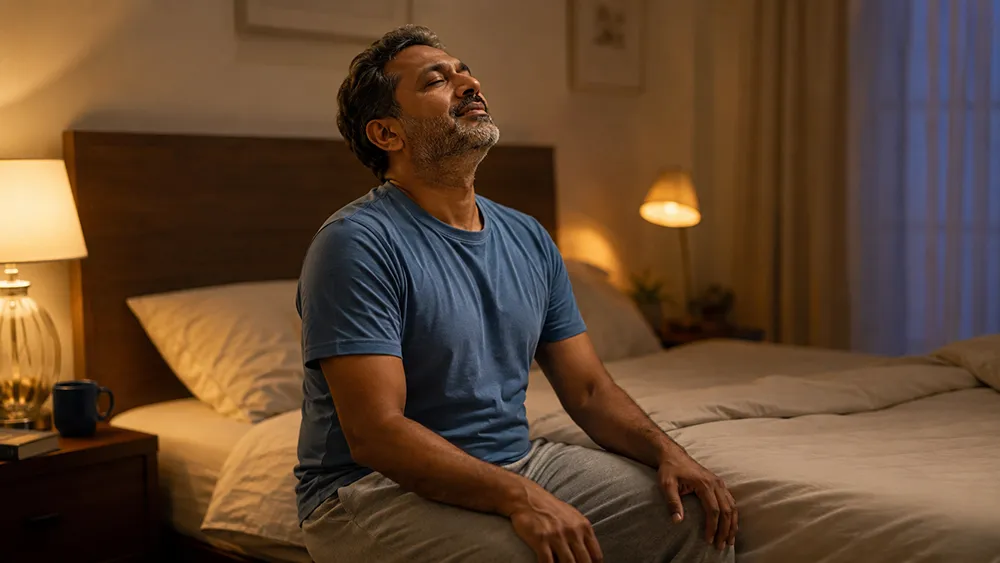
Deep breathing isn’t performance theater. Slow diaphragmatic breathing activates the parasympathetic nervous system, the same system that supports sexual response and is suppressed by the anxiety response. A few minutes of deliberate slow breathing before or during intimate situations has a measurable physiological effect on the stress response.
Specifically: inhale for four counts, hold for four, exhale for six to eight. The extended exhale drives parasympathetic activation. Do this for three to five minutes before an intimate encounter, and you’re giving your body a genuine physiological head start.
Body Scan Practice
The body scan is a meditation technique that involves deliberately moving attention through different parts of the body, noticing sensations without judgment. Regular practice trains the same attentional redirection that’s needed to interrupt spectatoring during sex.
Ten minutes of body scan practice daily, outside of sexual contexts, builds the neural habit that can then be deployed in the moment when the commentary booth starts calling. The skill transfers.
Practicing Mindfulness During Sex
Applying these techniques directly during sexual activity means maintaining deliberate attention on physical sensation — what you can feel, hear, smell, and experience in the present moment — rather than monitoring performance or predicting outcomes.
This is harder than it sounds, especially early on, when the habit of spectatoring is well established. The practice is simply to notice when attention has drifted to self-monitoring and redirect it back to sensation. No self-criticism for the drift. Just the redirect. Body and mind working together rather than at cross-purposes.

Communication Strategies
Here’s the part most men skip, which is a significant reason many men don’t fully resolve their SPA.
Trying to manage sexual performance anxiety in silence is like trying to fix a leak without telling the other person in the house that there’s water coming through the ceiling. The concealment adds cognitive load, prevents your partner from being a resource, and almost inevitably creates distance and misinterpretation that worsen the underlying problem.
How to Have the Conversation
The conversation doesn’t need to be a formal sit-down with an agenda. For most men, it’s better if it isn’t. The goal is simply to let your partner know what’s happening — in plain language, without excessive clinical framing.
Something like: “I’ve been in my head during sex lately, and it’s been affecting things. It’s not about you — it’s a loop I’m stuck in, and I’m working on it. I wanted you to know so we can figure this out together.”
Talk to your partner before the next intimate encounter, not during or after one. The timing matters.
What Helps a Partner Help You
Being open with your partner about SPA gives them the information they need to actually be useful. Most partners, once they understand what’s happening, want to help — and the help they can offer is significant. A partner who knows that performance pressure is the enemy can actively work to reduce it: lower-stakes encounters, explicit verbal reassurance, patience with pacing, and a genuine non-critical environment where the focus is on connection rather than outcome.
Most men are surprised by how relieved their partners are to understand what’s been going on. The story a partner tells herself in the absence of information is almost never more charitable than the truth.
Couples-Based Exercises
For couples who want to actively work on SPA together, sensate focus (described above) is the most structured option. Beyond that, simply establishing an ongoing dialogue about what feels good, what generates pressure, and what both partners want from their sex life is itself therapeutic.
Couples therapy can help when the SPA has created enough relational strain that working through it independently feels like too much to navigate. A good couples therapist who has experience with sexual problems can facilitate conversations that are hard to have without a neutral third party.

Professional Support: Therapy and Sex Therapy
Self-directed approaches work for a meaningful proportion of men with mild to moderate SPA. For men with more entrenched anxiety, deeper psychological roots, or SPA that’s been running for years, professional support isn’t just helpful. It’s usually the difference between partial improvement and genuine resolution.
What to Expect From Therapy With a Sexual Health Focus
Structured talk therapy in a clinical setting for sexual performance issues is practical and goal-oriented. Sessions typically involve reviewing thought records from the previous week, working through specific cognitive distortions, designing behavioral experiments, and debriefing their outcomes. It’s collaborative. A long way from lying on a couch talking about your mother.
Men who approach therapy expecting to spend months excavating their childhoods are sometimes surprised by how present-focused the process is. Therapy can help produce meaningful results in a compressed timeframe — often 8–16 sessions. Overcoming performance anxiety through this route tends to produce more durable results than self-directed work alone, particularly for men with deeper-rooted triggers.
What Sex Therapy Actually Looks Like
Sex therapy is psychotherapy with a specific focus on sexual concerns. It’s almost entirely talk-based. Despite what some men imagine, a sex therapist doesn’t observe or participate in sexual activity. Sessions involve discussion of sexual history, current concerns, relationship dynamics, and behavioral homework (which is where techniques like sensate focus get introduced and refined).
A good sex therapist will also screen for physical and health conditions that can contribute to sexual dysfunction and will coordinate with medical providers when appropriate, including when a PDE5 inhibitor might be a useful part of the treatment plan. They’re the quarterback of the process, not just one player.
To find a qualified specialist, look for credentials from the American Association of Sexuality Educators, Counselors and Therapists (AASECT). Not all therapists who say they treat sexual concerns have specialized training.
When to Seek Professional Support
Seek professional help when:
- Self-directed approaches haven’t produced meaningful improvement after six to eight weeks of genuine effort
- The SPA appears rooted in past trauma, significant anxiety disorders, or depression
- The problem is creating serious strain in a relationship
- You’re experiencing symptoms of sexual performance anxiety that extend beyond the bedroom — avoidance, shame, significant impact on overall well-being, and sex drive
There’s no medal for handling this alone. Psychotherapy for SPA isn’t a last resort. It’s often the most efficient path.
Medical and Telehealth Options
Medical intervention isn’t the right first move for every man with SPA. But for men where anxiety and physical erectile dysfunction have become entangled, which happens more often than not in men over 45, medical support alongside psychological work can meaningfully accelerate progress.
PDE5 Inhibitors as a Strategic Tool
PDE5 inhibitors (sildenafil/Viagra, tadalafil/Cialis, and their generics) work by increasing penile blood flow in response to stimulation. They don’t create desire where none exists, and they don’t eliminate psychological anxiety. What they do is reduce the physiological impact of that anxiety on erection quality.
For men with SPA, this can be strategically useful. The fear of losing firmness mid-encounter is itself one of the primary anxiety drivers. When a man knows that pharmaceutical support is available, that specific fear loses some of its power, which can reduce the anxiety load enough to let natural function reassert itself.
Used this way, PDE5 inhibitors aren’t a permanent solution or a crutch. They’re a confidence scaffold that can be gradually stepped down as the psychological work takes hold. Many men find they need them less and less over time as the anxiety loop quiets.
It’s worth noting that PDE5 inhibitors don’t address the causes of erectile dysfunction. They address the symptom. For men whose problems are driven purely by anxiety, the medication is a tool. For men with underlying vascular or hormonal health conditions, it may be masking a physical issue that needs its own attention.
Testosterone and Hormonal Factors
Low testosterone affects libido, sexual interest, mood, energy, and erectile function, and it’s more common in men over 40 than is widely appreciated. A simple blood test can establish baseline levels and identify whether low T is a contributing factor.
If it is, treatment options range from lifestyle interventions (sleep, resistance training, body composition improvement) to testosterone replacement therapy, depending on severity. Low testosterone won’t resolve through psychological work alone, which is why ruling it out early is worth doing.
What a Telehealth Consultation Looks Like
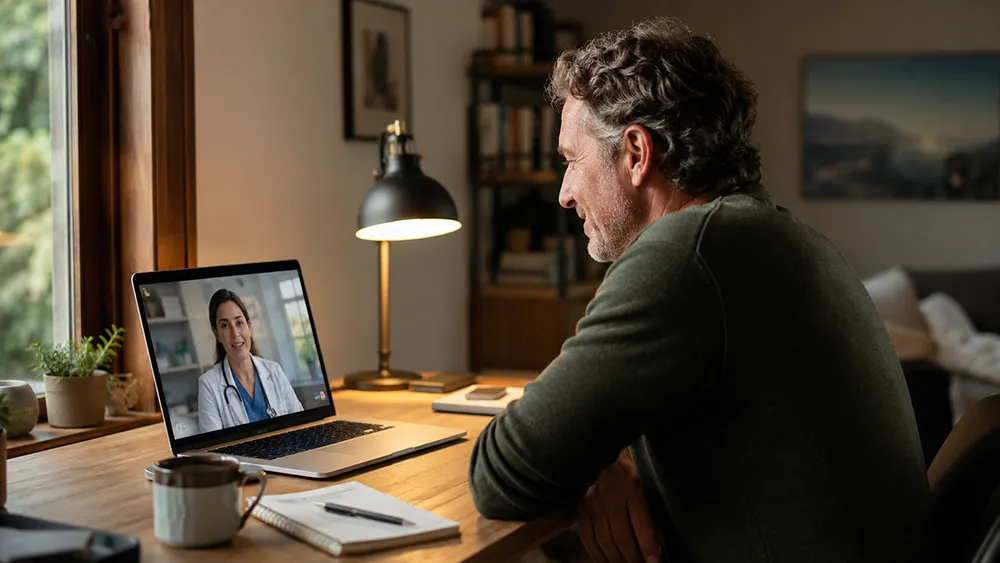
The barrier to discussing sexual concerns with a healthcare provider has dropped significantly with the expansion of telehealth. A typical consultation involves an online intake form covering health history and current concerns, a video or asynchronous appointment with a licensed provider, and a prescription sent directly to a pharmacy if appropriate.
For men who are embarrassed to raise sexual problems in a face-to-face clinical setting, telehealth provides a lower-friction entry point that can make the difference between getting help and not. Whether you choose a telemedicine approach or speak directly to your doctor, the important thing is getting the care you deserve.
Building Your Personal Protocol
Every technique in this post has a track record. Not every technique is right for every man.
SPA triggers generally fall into a few major categories: psychological, relational, pornography-related, and physical/lifestyle. If you haven’t taken stock of which ones apply to you, that’s a useful exercise before building your protocol — our post on the causes of sexual performance anxiety goes deep on each one. Your approach should map to your specific trigger profile.
A man whose SPA is primarily driven by performance-frame thinking and spectatoring will get the most traction from cognitive work and mindfulness practice. A man whose SPA is rooted in relationship tension will need the communication and couples-based work as his foundation. A man with significant physical contributors — low testosterone, cardiovascular risk factors, medication side effects — needs medical evaluation before expecting psychological approaches to fully land.
Most men are dealing with more than one category, which means most men benefit from more than one approach running simultaneously. Left untreated, SPA becomes a vicious cycle that compounds over time, each bad experience feeding the next. The combination that works is the one that addresses your actual combination of triggers, not the one that sounds most appealing or least uncomfortable.
Structured talk therapy provides structure that self-directed work often lacks. Muscle relaxation techniques — progressive muscle release, deep breathing, body scans — give the nervous system something to do besides catastrophize. And the emotional and physical benefits of lifestyle improvements compound quietly in the background of everything else.
A few practical starting points:
Start with communication if you have a partner. Everything else works better in an environment of openness than concealment — and it’s one of the fastest ways to help overcome sexual performance anxiety when a relationship dynamic is part of the trigger profile.
Add present-moment practice regardless of your trigger profile. It’s low-cost, has no downside, and builds a skill that’s useful across every other approach.
Consider an early telehealth consultation if you’re over 45 or have any physical health concerns that might be contributing. Ruling out or addressing physical factors — including generalized anxiety disorder if it’s in the picture — clears the field for psychological work and gives you peace of mind that you’re not missing something medical.
Work with a professional if you’ve been dealing with this for more than a few months without improvement. Self-directed approaches have a ceiling, and good support raises it significantly.
Frequently Asked Questions (FAQ)
Can I overcome sexual performance anxiety on my own?
Many men do, particularly when SPA is mild and relatively recent. Self-directed cognitive techniques, breathing exercises, lifestyle changes, and honest communication with a partner can produce real results without professional help.
That said, working with a professional tends to produce faster and more durable outcomes, especially for men whose SPA has deeper roots or has been running for a long time. If it’s been more than six months of genuine effort without meaningful improvement, professional support is the smarter move.
How long does it take to see results?
It depends on severity, trigger profile, and how consistently the techniques are applied. Men with mild SPA who make genuine changes often notice improvement within a few weeks. Men working through more entrenched patterns typically see meaningful progress within 8 to 16 sessions with a therapist. Sexual performance anxiety can affect men for years before they seek help. The sooner you start, the faster you’ll move toward lasting longer and improving your intimate connections.
Do I have to tell my partner?
You don’t have to do anything. But trying to manage SPA without your partner’s knowledge is genuinely harder, and the concealment tends to create its own relational problems. Most men who finally have the conversation report that their partner’s response was more understanding than they expected, and that the openness itself produced a meaningful reduction in pressure. Being open with your partner isn’t just good relationship practice. It’s part of the treatment.
Will medication fix my sexual performance anxiety?
Medication alone won’t fix the psychological loop that drives SPA. PDE5 inhibitors can reduce the physiological impact of anxiety and provide a confidence scaffold while psychological work progresses, but they don’t address the underlying causes. Men who rely exclusively on medication without doing the cognitive and behavioral work tend to remain dependent on it. The goal is to use medication as a strategic tool, not a permanent solution.
What if I have both SPA and physical erectile dysfunction?
This is extremely common, especially in men over 45, and well worth figuring out if you have SPA, ED, or both. The two conditions frequently coexist and reinforce each other. Physical problems trigger performance anxiety, and performance anxiety worsens physical problems. The treatment approach needs to address both simultaneously. A healthcare provider can assess the physical component; a specialist in sexual concerns can address the psychological one. Telehealth makes coordinating both more accessible than it used to be.
Is sexual performance anxiety a form of sexual dysfunction?
Clinically, yes. Sexual performance anxiety is recognized as a contributor to sexual dysfunction, including erectile dysfunction and premature ejaculation. Whether it constitutes a sexual disorder on its own depends on diagnostic framing, but practically speaking, it significantly impairs sexual satisfaction, it responds to treatment, and it’s worth taking seriously as a health concern rather than a personal failing.
Can lifestyle changes actually make a difference?
Meaningfully, yes. Sleep, exercise, alcohol reduction, and stress management all affect the physiological substrate that sexual function depends on. Cortisol suppresses testosterone. Poor sleep degrades everything. Chronic stress keeps the sympathetic nervous system primed in ways that directly oppose the parasympathetic state sex requires.
Addressing lifestyle factors won’t resolve deep psychological SPA on their own, but they remove contributing factors and improve the conditions in which every other treatment approach operates. Think of lifestyle changes as raising the floor, not the whole solution. Move in this direction and you might even discover that your penis is getting harder!
Does morning wood have anything to do with sexual performance anxiety?
Morning erections are one of the most useful diagnostic signals a man has access to. They occur during REM sleep, completely outside any psychological context, making them a reliable indicator of baseline physical function. If you’re waking up with regular morning wood but struggling during partnered sex, that’s strong evidence the plumbing is working fine, and the problem is psychological.
If morning erections have declined or disappeared alongside your performance issues, that’s worth flagging with a healthcare provider — it may point to a physical factor that psychological techniques alone won’t fix.
Does the refractory period make performance anxiety worse?
It can, particularly in men over 40, where the refractory period lengthens noticeably. When recovery time increases, a bad experience carries more psychological weight — the next opportunity feels further away, which gives the brain more time to build anticipatory anxiety around it.
Men who understand this dynamic are better equipped to treat a difficult encounter as a single data point rather than a verdict. The refractory period is physiological, not failure, and managing the mental response to it is as important as managing the encounter itself.
Can masturbation habits affect sexual performance anxiety?
Yes, in a few distinct ways. Frequent masturbation immediately before partnered sex can temporarily affect arousal and response, which some men misread as dysfunction and spiral from there.
Heavy pornography consumption during masturbation can set unrealistic performance benchmarks that fuel anxiety in real encounters. And for some men, masturbation guilt — rooted in religious or cultural messaging — creates a generalized sexual shame that surfaces during partnered sex even when the specific act is different.
None of this means masturbation is inherently problematic. It means the habits around it are worth an honest look if performance anxiety is in the picture.
Conclusion
Sexual performance anxiety is one of the more treatable problems men face in the bedroom. The toolkit is well-mapped, the approaches are evidence-based, and the men who overcome sexual performance anxiety consistently are almost always the ones who addressed both the loop and its underlying causes rather than waiting for it to sort itself out.
The work isn’t complicated. It’s just uncomfortable enough that most men delay starting it, which is the main reason SPA persists longer than it needs to.
Pick one technique from this post that fits your situation. Start this week. That’s the protocol.
If you’re still working out whether what you’re dealing with is SPA or something more physical, our post on SPA vs. ED (COMING SOON) is a useful place to start. If you want a broader overview of what sexual performance anxiety actually is and how the loop works, the complete guide covers that ground. And if you haven’t taken a close look at what’s specifically driving your anxiety, our What Triggers Sexual Performance Anxiety post is worth reading before you decide where to focus your energy.
Start somewhere. The loop breaks when you interrupt it.